Peptide Stacking Explained
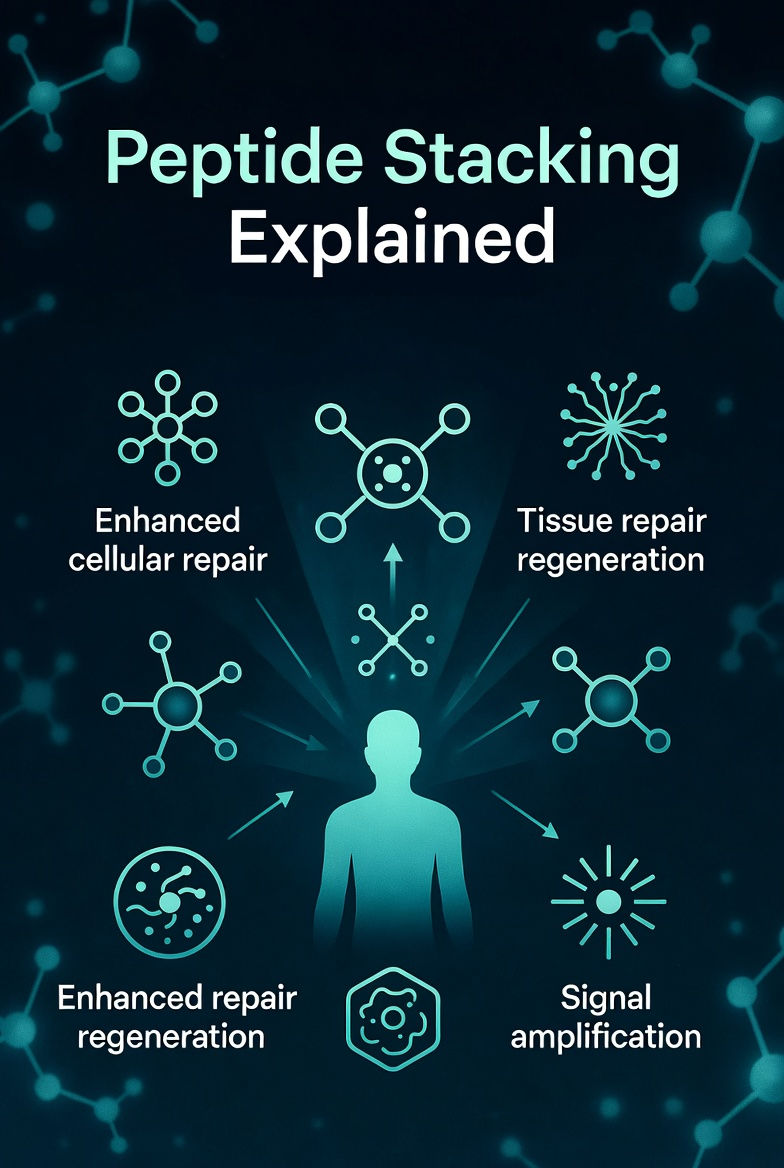
Peptide stacking refers to the strategic combination of multiple peptides to influence complementary signaling pathways. In Targeted Peptide Systems, stacking is not about combining effects—it is about aligning signals within a coherent biological framework.
The most common misconception is that stacking increases results by adding more compounds. In reality, poorly structured stacking can lead to:
Redundant signaling
Receptor competition
System overload
Effective stacking is based on functional complementarity, not accumulation.
A systems-based stack considers:
1. Pathway Diversity
Each peptide should influence a different aspect of the system. For example:
Vascular signaling
Cellular migration
Inflammatory modulation
2. Signal Hierarchy
Stacks should include peptides that operate at different levels:
Upstream regulators
Mid-level coordinators
Downstream effectors
3. Temporal Alignment
Signals must be timed appropriately. Some peptides work best in pulses, while others provide continuous support.
4. System Capacity
The system must be able to process multiple signals simultaneously. If not, signals compete rather than cooperate.
In Targeted Peptide Systems, stacking is framed as systems orchestration. The goal is to create a signaling environment where each input enhances the effectiveness of the others.
For example, a regenerative stack may include:
A vascular support signal
A cellular migration signal
A structural remodeling signal
Each plays a distinct role, but together they create a cohesive repair environment.
Stacking also requires awareness of adaptation. Repeated exposure to multiple signals can accelerate receptor desensitization if not managed properly.
Ultimately, stacking is not about doing more—it is about doing better with alignment.


Comments