[ PEPTIDE_PROFILE // TB-4_THYMOSIN // BIO_SYNC_v9.1 ]
Thymosin Beta-4: The Master Architect of Biological Repair
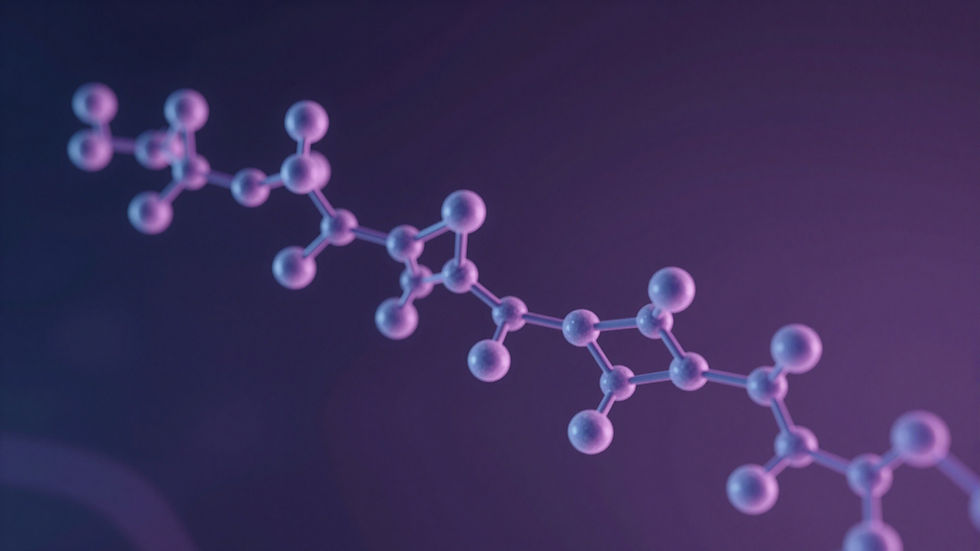
Thymosin Beta-4 (Tβ4) is a ubiquitous, 43-amino acid peptide that functions as the primary G-actin sequestering molecule in biological systems. Within the NuTide Paradigm, it serves as a central hub for cellular signaling—directing the migration of stem cells and endothelial cells to sites of injury.
Tβ4 doesn't simply mask symptoms; it initiates a systemic cascade of repair by maintaining the availability of unpolymerized actin, the essential building block for cytoskeletal reorganization and tissue remodeling.
Thymosin Beta-4 is often spoken about as though it belongs only to the world of injury repair, but that interpretation is far too narrow. In the Targeted Peptide Systems framework, Thymosin Beta-4 is better understood as a structural intelligence peptide—a signaling molecule involved not simply in healing damaged tissue, but in helping biological systems reorganize themselves after disruption. It is less about forcing repair and more about restoring the choreography of repair.That distinction matters.
Tissue healing is not a single event. It is not just inflammation followed by collagen deposition. It is a tightly regulated sequence involving cellular migration, angiogenesis, cytoskeletal remodeling, inflammatory resolution, and matrix reorganization. If these events occur in the wrong order—or with the wrong intensity—repair becomes incomplete, fragile, or excessive. Scar tissue forms where function should have been restored. Mobility returns partially instead of fully. Regeneration is replaced by compensation. Thymosin Beta-4 is compelling because it appears to operate close to the level where these outcomes are decided.
Naturally present in many tissues throughout the body, Thymosin Beta-4 is a 43-amino-acid peptide with broad intracellular and extracellular relevance. It has been studied in connection with actin regulation, wound healing, blood vessel formation, inflammatory control, cardiac repair, ocular healing, and musculoskeletal regeneration. That breadth is not incidental. It reflects the fact that Thymosin Beta-4 does not behave like a single-purpose signal. It behaves more like a repair-enabling coordinator—a peptide whose relevance emerges wherever tissue must recover its structural order. (pmc.ncbi.nlm.nih.gov)
One of the most important aspects of Thymosin Beta-4 is its relationship to actin dynamics. Actin is a foundational structural protein involved in cellular movement, shape, and intracellular organization. This matters because healing is not merely about cells existing at the injury site—it is about cells being able to move, orient, and rebuild appropriately once they arrive. In systems terms, this makes Thymosin Beta-4 especially interesting: it appears to influence not just the biochemical “decision” to repair, but the physical capacity of tissue to carry that repair out with coherence.
That systems-level role helps explain why Thymosin Beta-4 has drawn so much attention in regenerative medicine. In tendon, ligament, muscle, skin, corneal, and even cardiac models, it has been investigated for its ability to support cell migration, angiogenesis, and organized healing responses. This is a crucial point. A useful regenerative signal is not necessarily the one that creates the most inflammation or the fastest visible closure. It is the one that helps the tissue rebuild in a way that preserves function. Thymosin Beta-4 appears compelling because it may improve the quality of tissue recovery, not just the speed. (pmc.ncbi.nlm.nih.gov)
In the language of Targeted Peptide Systems, Thymosin Beta-4 belongs to the category of peptides that support repair intelligence rather than simple stimulation. It is not merely a “healing peptide” because healing itself is too crude a phrase. It is more accurate to say that it may help injured tissue regain enough organizational competence to transition from breakdown into useful rebuilding.
That is also why its relevance extends beyond visible injury. Any tissue under chronic strain—whether inflammatory, mechanical, ischemic, or degenerative—exists in a state of structural negotiation. The body is continuously deciding whether to preserve, adapt, scar, or fail. Thymosin Beta-4 appears to matter because it may bias that decision toward preservation and regeneration.
At the same time, this peptide deserves scientific maturity. Thymosin Beta-4 has a strong mechanistic rationale and a broad body of preclinical support, but it should not be framed as a universal repair solution. Much of the enthusiasm surrounding it comes from experimental and translational settings, not from a complete and settled human evidence base across all uses. That does not diminish its relevance—it simply places it where it belongs: as a high-interest regenerative peptide with systems-level importance, not a miracle signal.
Within Targeted Peptide Systems, Thymosin Beta-4 earns its place because it illustrates a core principle of precision bioregulation: healing is not simply about replacing what was lost. It is about restoring the pattern that allows function to return. Thymosin Beta-4 appears meaningful because it may help tissue remember that pattern.
And in regenerative science, that is not a minor role.
It is foundational.
Research Citation
Goldstein AL, Kleinman HK. Advances in the basic and clinical applications of thymosin β4. Expert Opinion on Biological Therapy. 2010. (pmc.ncbi.nlm.nih.gov)
MOLECULAR_SEQUENCE_OVERRIDE:
SDKPDMAEIEKFDKSKLKKTETQEKNPLPSKETIEQEKQAGES
Angiogenesis Control
Orchestrates the formation of new capillary networks, essential for nutrient delivery and gas exchange in regenerating tissue environments.
[ REGENERATIVE_COEFFICIENT: OPTIMIZED_A+ ]
Cytoskeletal Dynamics
Directs cell migration through the sequestration of G-actin, enabling rapid response to systemic cellular disruption.

Anti-Fibrotic Signaling
Reduces the formation of excessive scar tissue while upregulating healthy collagen synthesis for functional repair results.
[ SCIENTIFIC_VERIFICATION // PEPTIDE_DYNAMICS_v4.0 ]
The Molecular Mechanics of Regenerative Signaling
NuTide’s approach to TB-4 is rooted in its role as a regulator of actin dynamics and cellular movement. By facilitating systemic repair through precise protein interaction, Thymosin Beta-4 represents the cutting edge of biological infrastructure management.
Actin Sequestration
Binds G-actin in a 1:1 stoichiometric ratio, maintaining a pool of unpolymerized monomers for rapid cytoskeletal reorganization during cell migration and tissue morphogenesis.
Angiogenic Influx
Upregulates VEGF and activates signaling cascades that drive endothelial cell migration, stimulating the formation of new capillary networks critical for restoring circulation in damaged zones.
Multi-System Protection
Preclinical data indicates robust neuroprotective and cardioprotective roles, potentially activating dormant epicardial cells and preserving neuronal integrity following systemic stress events.
Preclinical Efficacy
Validated across multiple bench models for dermal and corneal repair, showcasing a significant reduction in chronic inflammatory markers and accelerated re-epithelialization vectors.
NOTE: The information provided summarizes preclinical tissue repair data and molecular dynamics observed in early-stage research models. These findings are shared for science-forward educational purposes and do not constitute medical claims, clinical advice, or FDA-verified health outcomes.
[ APPLICATION_SCOPE // TB-4 ]
Regenerative Vectors
Musculoskeletal Recovery
- Accelerates satellite cell recruitment to mechanical injury zones.
- Upregulates focal adhesion kinase pathways for structural restoration.
Post-Surgical Interface
- Enhances keratinocyte migration across disruption suture lines.
- Optimizes extracellular matrix deposition in deep-tissue repair.
Cardio/Neuro Resilience
- Supports epicardial progenitor activation for cardiac density.
- Preserves neuronal survival markers within systemic stress environments.
Systems-Level Integration
- Serves as the central node for synergistic multi-peptide signaling.
- Bridges repair signals across skeletal, vascular, and neural networks.
[ CLINICAL_PROTOCOL_v4 ]
Advanced Practitioner Parameters
The integration of Thymosin Beta-4 into regenerative protocols requires an architecture of biological precision. Researchers must move beyond simple supplementation toward pharmacokinetic synchronization, deploying Tβ4 as a primary sequestration agent within systems-level signaling networks.
Effective research outcomes are contingent upon biomarker-guided navigation—meticulously monitoring vascular expansion markers like VEGF and systemic inflammatory indices to maintain tissue repair within strict homeostatic parameters. Decisions regarding monitoring and titration must be dictated by biomarker data to ensure the metabolic synergy of the protocol is preserved across all biological phases.
EXPERIMENTAL STATUS NOTICE
Thymosin Beta-4 is primarily categorized as an experimental research compound. Regulatory status is subject to jurisdiction; it is not currently approved by the FDA or EMA for clinical applications outside of rigorous laboratory parameters. Any systems-level exploration must be executed under the professional mandate of qualified clinicians or advanced practitioners specializing in bio-optimization and regenerative signaling networks.
[ RESOURCE_HUB ]